
You've put the systems in place. You've trained the team. You've even run a few improvement projects. But here you are again — dealing with inconsistent output, missed targets, and the same problems resurfacing week after week.
The issue isn't effort. It's clarity.
Most operations struggle not because people don't care, but because nobody has ever clearly defined what good performance actually looks like. Without that definition, teams can't aim at the right target. Managers can't give meaningful feedback. And improvement efforts have no fixed point to measure against.
Process drift doesn't happen overnight. It creeps in when standards are vague, when expectations are assumed rather than stated, and when nobody can point to a specific benchmark and say, "That's what we're aiming for."
"What does good look like?" sounds obvious. Most managers would say they know the answer. But ask them to write it down — clearly, specifically, in a way their team could act on — and the room goes quiet.
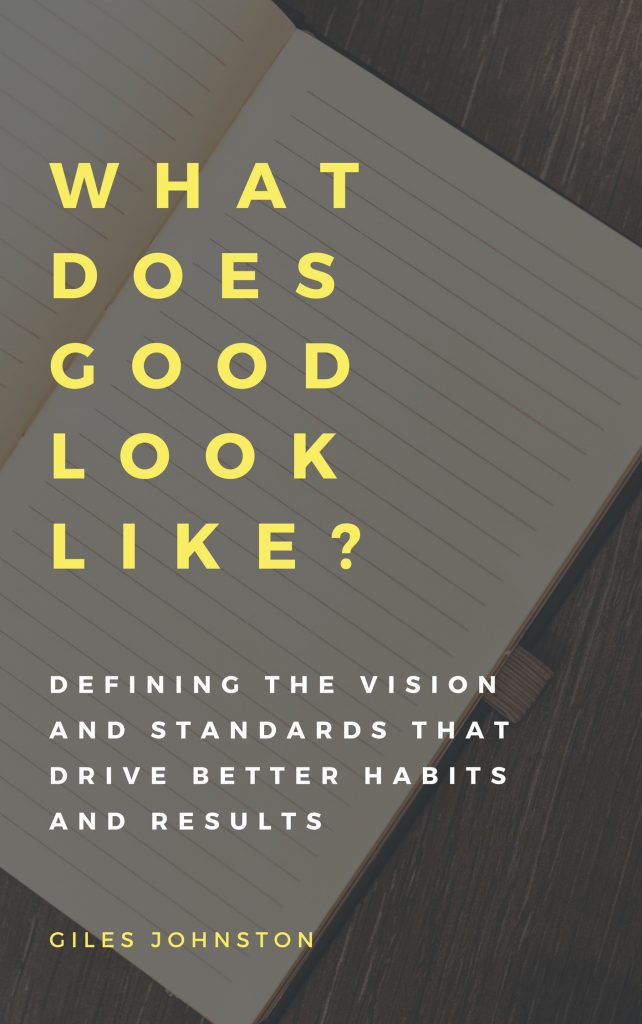
This book is built around that question. Not as a philosophical exercise, but as a practical tool for improving how your systems and processes perform day in, day out.
Giles Johnston has spent more than 25 years working with manufacturing and engineering businesses, helping teams go from firefighting to genuinely controlled operations. His clients have seen on-time delivery rates jump from 22% to 98%. Lead times cut by 70%. Real results, achieved not by throwing resources at problems, but by getting ruthlessly clear on what good performance actually requires.
This is not a theory textbook. Every chapter is designed to give you something you can use immediately.
You will learn how to:
You do not have time for a complex methodology that takes months to implement. This book respects that.
The approach is practical, step by step, and built for people running real operations — not academic case studies. Each concept is explained plainly, without jargon, and backed by examples drawn from real manufacturing and engineering environments.
Whether you are a Production Manager dealing with inconsistent output, an Operations Director trying to get more from your existing systems, or a Managing Director frustrated by the gap between what should happen and what actually does — this book gives you the framework and the tools to close that gap.
Every day you operate without a clear definition of good performance is a day your processes are working against you. The good news is that this is fixable — and it starts with one honest question.
What does good look like?
Get your copy of What Does Good Look Like? by Giles Johnston and start building the operational clarity your business deserves.
Download your copy today and put these simple, but effective, ideas into practice
© Smartspeed Consulting Limited. All Rights Reserved.