


When a staff member leaves your team, how do you seamlessly transition to a new member of staff?
It’s a good question and one that is often challenging in practice. So, parking the details around notice periods, hiring the right person, and all of the other practicalities for a moment, what about the tasks that need to be covered?
A job description is a good place to start but often only provides a superficial list of responsibilities. It might cover off the ‘what’ but it rarely pinpoints the ‘how. The day to day actions that make up the bulk of this particular role, and the difference it makes to the organisation.
Two key documents
In my experience there are two key documents that need to exist to make this problem a smaller one (you still need to find the person etc…!):
- A list of projects / ad-hoc tasks currently being undertaken by each member of staff.
- An effective routine.
The first item can be covered off using a simple list, or a task app. I recommend doing this.
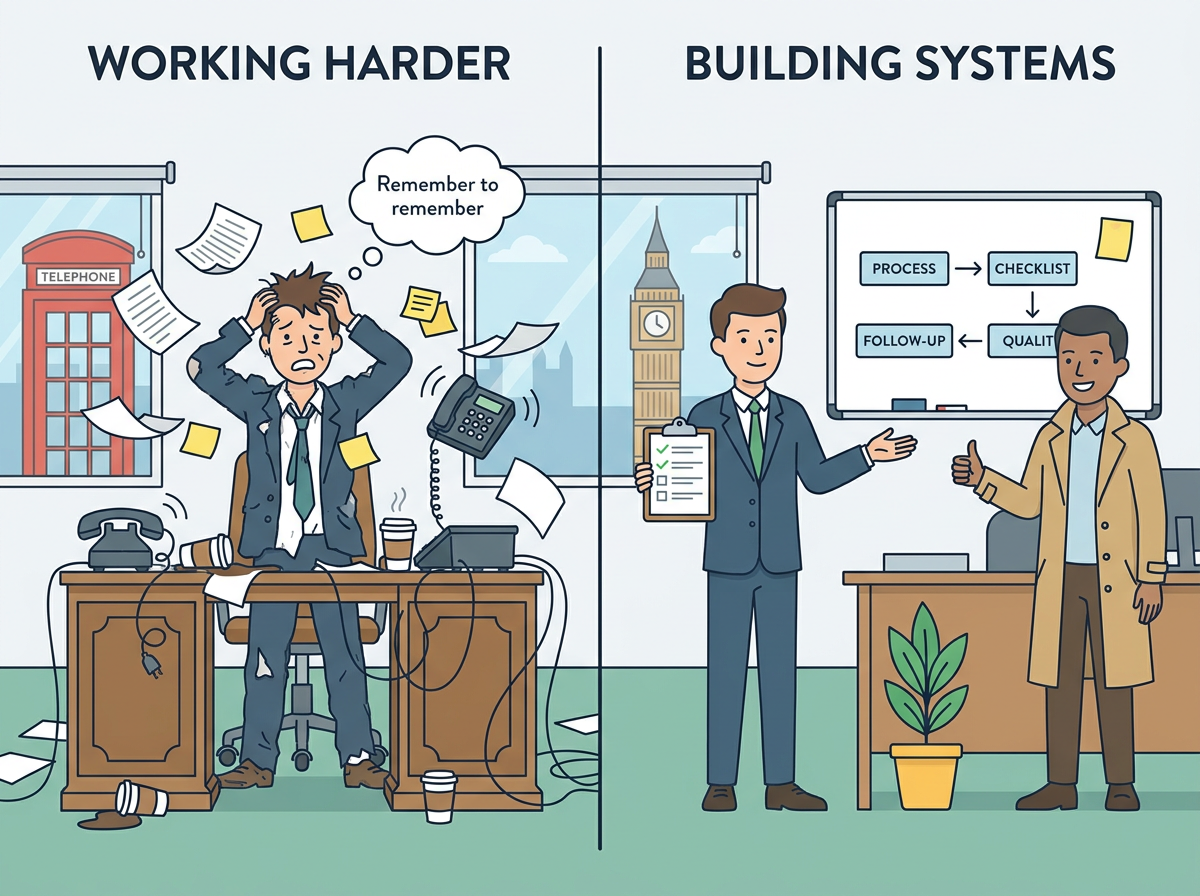
The second item is something that I see documented far less often, usually left up to the individual in charge. An effective routine. They don’t have to be complicated documents but they do need to capture the regular, repeating items, that make up the structure of the working day / week / month.
When routines are documented, they are often aimed at the lower levels of the organisation. This is a mistake. There are routines at every level of the organisation and these all need to be captured. People leave all levels of the organisation and so this is just logical that you capture everywhere.
When the time comes, and you replace a member of staff, the structure, the regular deliverables, they are all visible and transparent. Or, if you gain an additional team member, splitting up the roles and spreading the work is easier.
Real life example
I’d set this up for a client a few years ago, it was a ‘day in the life of’ for a quality inspector. We had even gone a step further and defined what the routine looked like when there was only one (of the two) people on shift. This clarified expectations and made life easier. Roll on to present day and I ended up in a conversation with the new person in position (and there is only one person now). They knew exactly what was expected of them and how to have a successful day.
This is how it should be. Managers shouldn’t have to keep on scratching their heads to explain a role in the business and then to also find out that the person that left did five other things that the new person knows nothing about!
So, here’s the question for you to ponder over:
“What routines do you have formally captured in your organisation?”
If you want some ideas on how you can apply routines across your entire organisation, or even just to your own role, then check out my book Every Business Needs a Routine. It is packed with practical ideas and strategies to make routines work for your business and great for getting out of Groundhog Day situations.

Enjoy creating your routines!
Giles